
Simplicity is not the starting point. It's the reward for engaging with complexity until it yields clarity.
I. The Ideation Gap
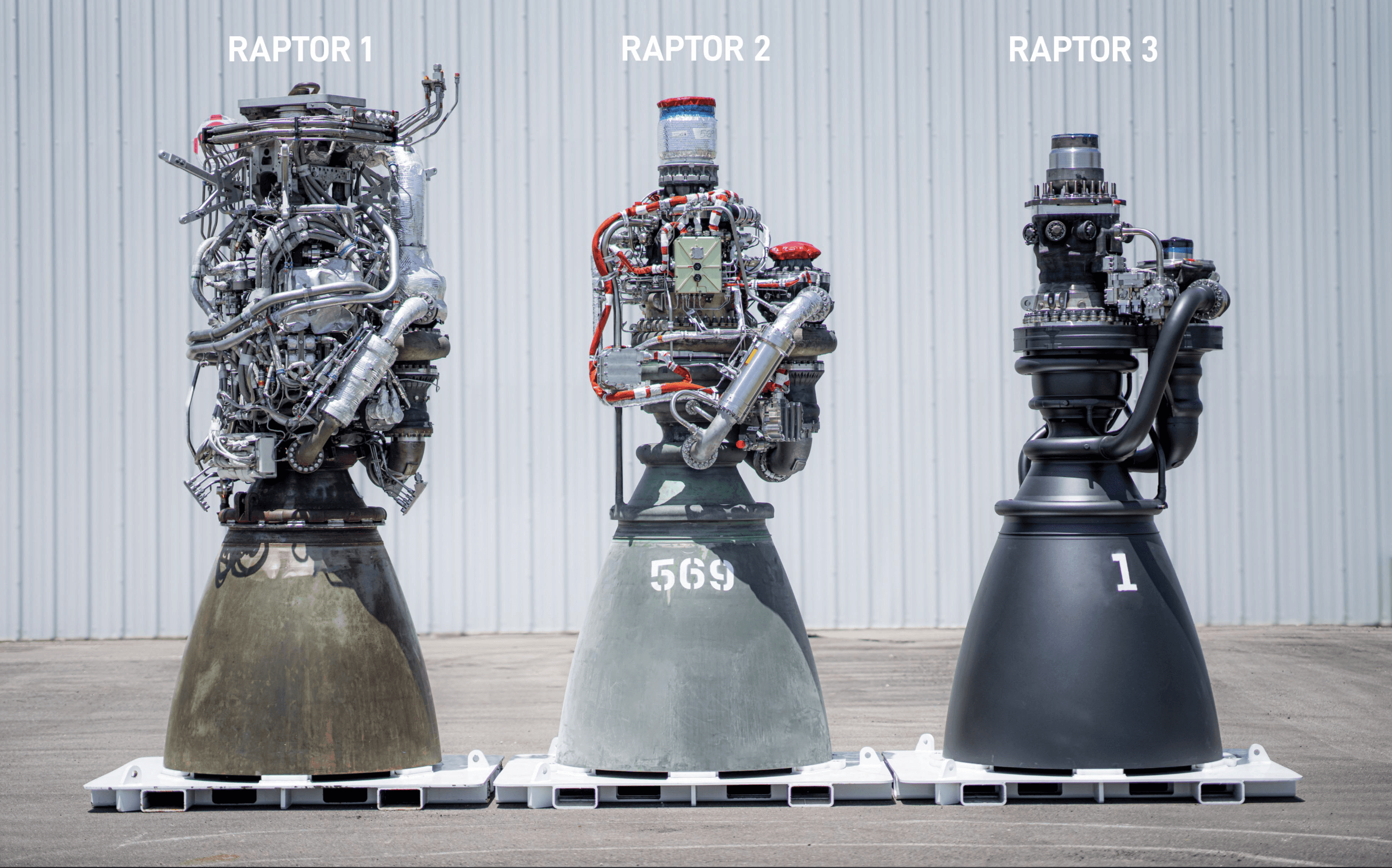
Innovation rarely begins with elegance. The first version of anything good looks awkward, overcomplicated, and inefficient - almost indistinguishable from a bad idea. SpaceX's Raptor 1 engine was exactly that: heavy, temperamental, and overbuilt. If you saw it in isolation, divorced from context, you'd think the engineering team had lost the plot. And yet Raptor 1 was the foundation for Raptor 3, one of the most efficient rocket engines ever designed.
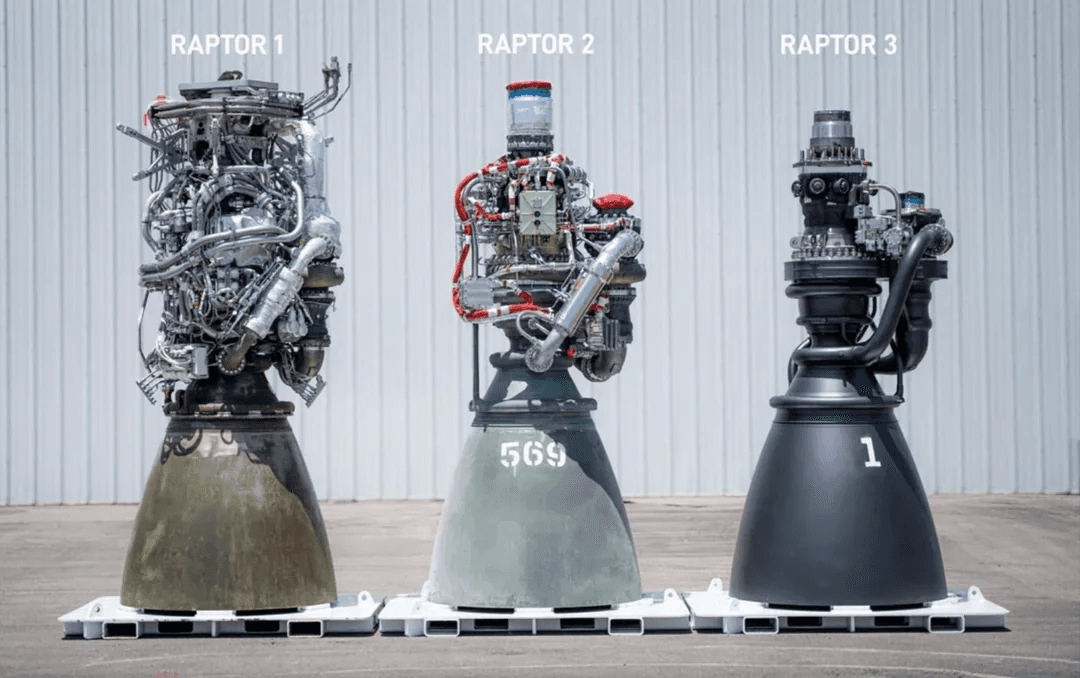
The gap between those two engines - the painful, expensive, unglamorous distance between a rough beginning and a refined end… Is what I call the Ideation Gap. And the space you occupy while crossing it is the Innovator's Trench: that messy middle where nothing looks right, progress is barely visible, and the temptation to abandon ship is strongest.
Most people quit here. Not because the idea was wrong, but because the process of working through it felt wrong. Too complicated. Too tangled. Too far from the clean, elegant thing they imagined it would be.
But here's the paradox most people never stay long enough to discover: complexity at the beginning is not an early sign of failure. It's the entry cost of genuine innovation. The difficulty is the signal that you've found something worth exploring.
II. The Traps of Modern Creation
We live in an era that worships the finished product. We scroll past polished launches, elegant interfaces, and streamlined businesses, and we compare them to whatever half-formed thing we're wrestling with in private. This comparison is demoralising, and it's a trap…Two traps, in fact.
The first is the Grass-is-Greener Fallacy: the belief that someone else's finished simplicity means your current complexity is a red flag. You see a competitor's clean product, a peer's sharp thesis, a founder's tight pitch - and you assume they started there. They didn't. You're comparing your Raptor 1 to their Raptor 3, and mistaking a difference in stage for a difference in quality.
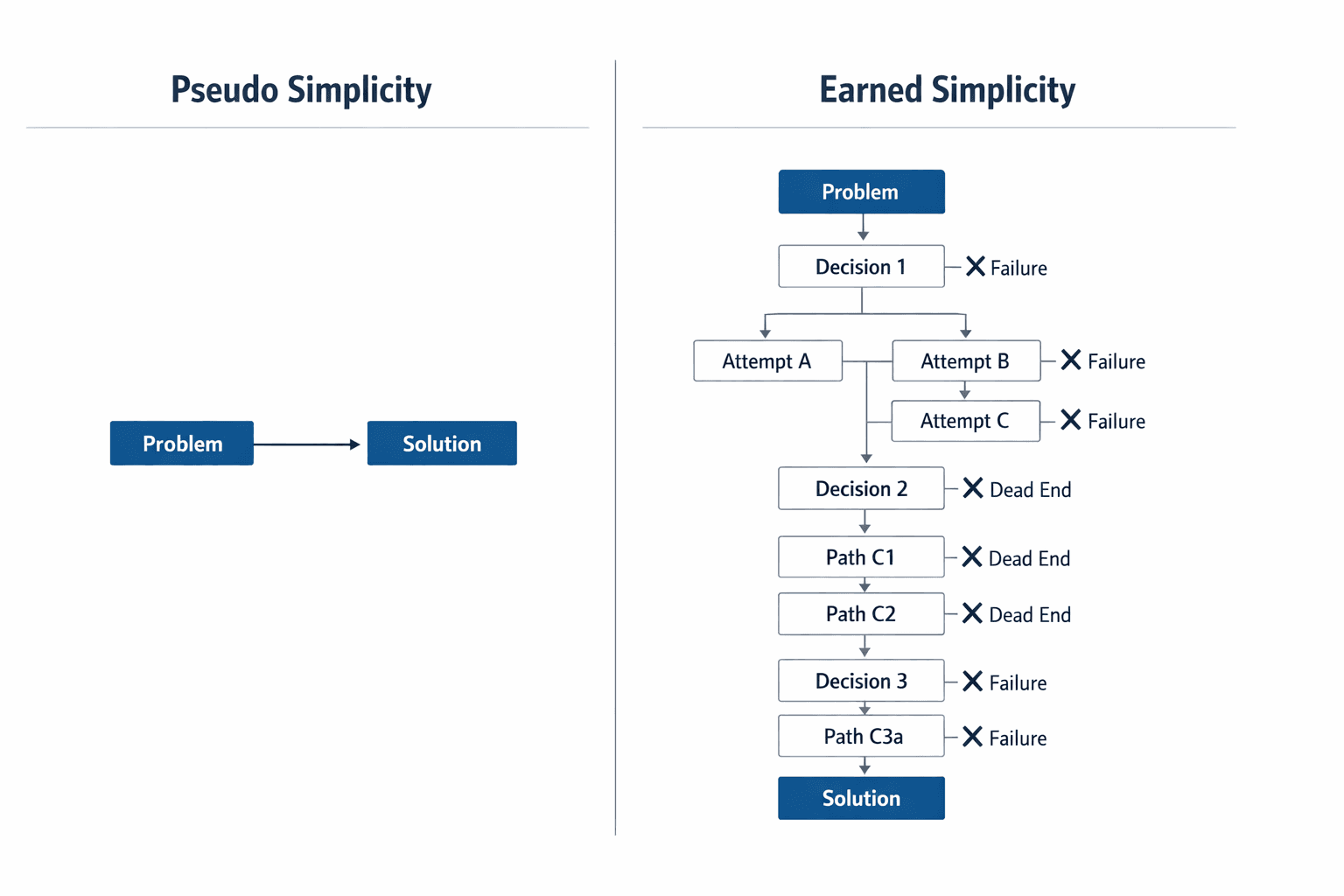
The second is the Simplicity Trap: mistaking mature simplicity for effortless simplicity. We assume that if something looks clean, it was always clean. But true simplicity is derived, not stumbled upon. It's the residue of someone who spent long enough inside complexity that the unnecessary fell away and only the essential remained.
Think of the first time you tried to map a new workflow, understand a codebase, or break into an unfamiliar market. It looked overwhelming - not because you were out of your depth, but because you were expanding into new cognitive territory. That sensation of "this is too complicated" is just the feeling of learning something genuinely new. Complexity isn't a warning. It's a mile marker that reads new ground ahead.
III. Complexity as the Signal
Every new idea begins fuzzy - like a low-resolution image that only sharpens through iteration. You can't skip the rendering. You have to sit with the blur long enough that edges start to form.
There's a reason for this. The process of working through complexity is what generates understanding. Not reading about it. Not watching someone else navigate it. Working through it - with your hands in the mess. Complexity is simply knowledge in disguise. Once you map it, it becomes clarity. But mapping takes time, patience, and a willingness to feel genuinely lost.
We romanticise the eureka moment, but understanding is a function of iteration, not inspiration. Each pass through the problem reveals a little more detail, a little more structure. The breakthrough, when it comes, isn't a lightning bolt. It's the accumulated weight of every confused hour that preceded it - the moment when enough confusion has been metabolised that the underlying pattern finally becomes visible.
Raptor 1 to Raptor 3 wasn't a leap. It was a long, deliberate journey through what wasn't yet understood - until it was.
IV. The AI Ideation Trap
This is where things get interesting for anyone building in 2026.
AI has fundamentally accelerated ideation. You can generate frameworks, draft strategies, and explore solution spaces faster than at any point in human history. That power is real. But it introduces a new category of shallowness that I don't think we talk about enough.
The first problem is framing. AI can't answer questions you don't ask - and many creative problems aren't unsolved, they're misframed. If your understanding of a problem is off, AI will expertly solve whatever you put in front of it, even if what you put in front of it is the wrong problem entirely. And because its outputs are polished and articulate, it's difficult to see that you were wrong to begin with.
The second problem is pseudo-understanding. When AI derives a solution for you, it's tempting to feel like you understand it. But reading a solution and deriving one are fundamentally different cognitive acts. One gives you an answer. The other gives you the intuition to know why it's the right answer - and to recognise when it stops being right as conditions change. Outsourcing derivation creates the illusion of comprehension without the substance of it.
Taken together, these pitfalls produce a dangerous paradox: the faster we move, the more often we risk scaling the wrong solution. Speed through automation creates the illusion of progress - rapid, confident motion in the wrong direction.
None of this is an argument against AI. It's an argument for pairing its speed with the kind of deep reasoning that only comes from staying in the trench long enough to ask the right questions in the first place. We are building systems that can sprint beautifully. The hard part is making sure they're sprinting toward the right destination.
V. The Speed Fallacy
In startups and in life, speed feels synonymous with clarity. You're moving, iterating, shipping - the dopamine of momentum is intoxicating. But momentum and progress are not the same thing.
The modern world optimises for speed and simplicity. Founders are incentivised to move fast and feel clear: pick the obvious path, validate quickly, scale before anyone else gets there. But clarity derived too early is often an illusion. It feels like signal, but it's noise dressed up in confidence.
Consider two ideas sitting in front of you. Idea 1 is simple and obvious - easy to explain, easy to start, and it feels like momentum from day one. Idea 2 is messier, harder, more resistant to quick explanation. Most people pick Idea 1. It looks like the smart choice.
But Idea 1's simplicity might just mean the territory has already been explored. Its ceiling is low because the ground is already mapped. Idea 2 is complex because it's new. The complexity is the territory itself, and working through it is what creates the differentiation that no competitor can easily replicate.
The world rewards visible speed. But deep understanding compounds quietly in the background, invisible until the moment it becomes undeniable. Immediate clarity feels satisfying. Derived clarity - earned through wrestling with complexity - is enduring.
And here's the dangerous part: the two look almost identical from the outside. Earned clarity and intuitive simplicity can sound the same in a pitch, read the same in a strategy doc, even feel the same in your gut. The difference is that one was forged through contact with reality and the other was assumed before reality had a chance to weigh in. One bends under pressure; the other holds. But you can't tell which is which by looking - you can only tell by how it was arrived at. The only way to know whether your clarity is genuine or dogmatic is to have walked the journey yourself. If you skipped the trench, you're not clear. You're just confident.
We tend to sprint through the fog rather than pause to understand where the road bends. And then we wonder why we keep hitting walls.
VI. Through, Not Around
Problem-solving is like navigating a maze. The straight corridors - the obvious solutions - feel like progress. You're covering ground, making decisions, moving forward. But obvious paths in a maze tend to lead to dead ends.
The people who actually solve the maze aren't the ones who move fastest. They're the ones who learn its topography. They notice patterns, remember dead ends, and build a mental model of the structure they're inside. That takes time. It requires wrong turns. And from the outside, it looks spectacularly inefficient.
In business and in life, bottlenecks are signals of what you don't yet understand. They're not obstacles to route around - they're invitations to go deeper. Once you understand a bottleneck, it dissolves. And then a new, deeper one appears. That's not regression. That's iteration.
The founder's job - the innovator's art - is not to avoid complexity but to traverse it with discipline. To resist the seductive urge to shortcut around the trench and instead dig through it, knowing that what lies on the other side is understanding that no one else has, because no one else was willing to do the work.
VII. Derived Simplicity
Simplicity is not the starting point. It's the reward for engaging with complexity until it yields clarity.
Complexity is not the enemy of progress - premature simplicity is. When we skip the hard part, we build fragile clarity that collapses with the first change in context. When we embrace complexity, we earn the right to be simple later. The most successful founders, engineers, and thinkers know this instinctively: clarity compounds only after confusion is metabolised. You cannot skip the confusion. You can only move through it with enough intention that it transforms into something useful.
In a world obsessed with pace, meaning compounds through depth. The best clarity doesn't come from running fast. It comes from learning slowly - and then moving with the kind of conviction that only earned understanding can provide. The escape velocity comes only from clarity. Think slow, move fast.
So the next time you're staring at something that feels too complicated, too messy, too far from the elegant vision you had in your head - don't abandon it. You're not lost. You're in the trench.
And the trench is exactly where you need to be.

Let’s keep in touch.
Discover more about high-performance innovation. Follow us on LinkedIn and Instagram.