
Shop/Partnerships/How work really works
INSO Pulse
Your process diagram has never met your process.
See the organisation from the people doing the work. Bring structured employee input and operational evidence together to reveal handoffs, overlapping effort, capability gaps and assumptions nobody has revisited.
Sounds like
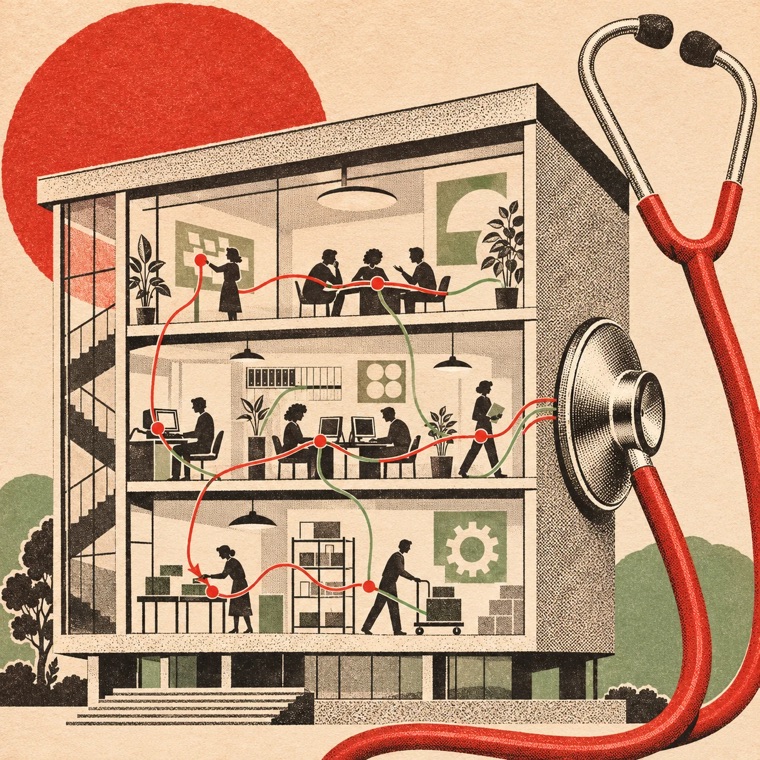
The official process is tidy.
The lived process depends on private spreadsheets, quiet workarounds and one person knowing who to call. Leaders see the delay at the end; employees experience a dozen small frictions along the way.
What you might be hearing
- Work waits for approval but nobody can see the whole queue.
- Different teams repeat the same task or check.
- A capability gap is being mistaken for a motivation problem.
How it works.
Agree the question and boundary first. Design structured conversations that can reach every employee in scope, supported by suitable records and process evidence. Map patterns across roles and handoffs, then distinguish symptoms, gaps and the decisions that could improve the flow.
- 1
Set the boundary and listening agreement
Define the organisational question, who needs a voice and how the information may be used. Agree confidentiality, aggregation, reporting and sponsor responsibilities before collecting evidence.
- 2
Follow the work from the ground up
Gather structured employee accounts and relevant records. Examine repeated tasks, queues, dependencies, workarounds, skill needs and the assumptions behind them. Compare the formal process with what people actually do.
- 3
Turn patterns into priorities
Create an evidence-led view of the flow. Rank improvement opportunities by consequence, feasibility and ownership. Return findings in a form people can challenge and leaders can act on.
What you leave with.
- A map of how work actually flows
- A view of overlaps, bottlenecks and capability gaps
- A prioritised initiative roadmap with decision owners
- Who it’s for
- Operations leaders, department heads and change sponsors who can act on what the organisation reveals.
- What to bring
- A sponsor, a clear diagnostic question and agreement on employee participation, evidence access and information use.
The friction-to-action map
An illustrative output connects what people experience to a useful operating decision.
- Observed pattern: the same request is checked by three teams.
- Questions: what is each check protecting, and where does ownership sit?
- Next decision: agree one owner and test a simpler handoff within defined controls.
Choose your format.
This builds a line in your brief. Scope and fees are agreed with you before anything is booked.
Before we talk.
The questions people usually ask first. Ask a different one
Will you interview every employee?
That can be the intended design for the population in scope. We agree the method, coverage, participation and phasing around organisational size and practical access.
Is this employee performance scoring?
Pulse examines operating patterns, capability needs and how work fits together. Individual monitoring or scoring is not the purpose. Confidentiality, aggregation and reporting rules are agreed before collection.
Does Pulse include process-mining software or integrations?
Only if explicitly scoped. Structured employee input and relevant records may be sufficient; technical analysis and implementation need their own responsibilities and expertise.
Will you implement the recommendations?
The diagnostic produces a prioritised starting point. A pilot, transformation or embedded delivery engagement can follow through a separate decision.