

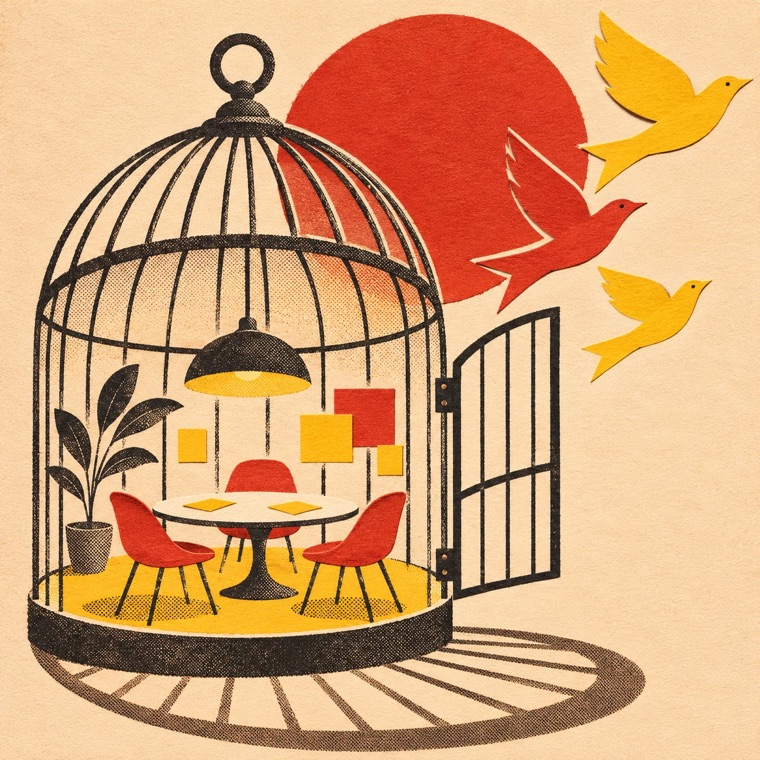
Sounds like
A leader asks for honest feedback and receives polite reassurance.
People talk freely after the meeting, but carefully inside it. The organisation learns about a problem only when it is too expensive to ignore.
What you might be hearing
- Bad news travels slowly upwards.
- People confuse challenge with disloyalty.
- A mistake becomes a search for someone to blame.
How it works.
Examine the small moments that teach a team whether speaking up is useful. Practise inviting dissent, responding to unwelcome information and keeping accountability clear. The work is about observable behaviour, not asking everyone to feel safe on command.
- 1
Read the room’s signals
Map when people speak, withhold, ask or defer. Distinguish a lack of information from a lack of permission to say it.
- 2
Practise the response
Rehearse receiving a concern without dismissing it, rescuing the conversation or making an immediate promise. Ask what needs understanding and agree the next step.
- 3
Change a team routine
Redesign one meeting or review to invite evidence and dissent. Agree how concerns are recorded, answered and followed through.
What you leave with.
- A map of speaking-up friction
- Rehearsed responses to difficult information
- One redesigned team routine with clear accountability
- Who it’s for
- Leaders, managers and teams working across hierarchy, risk or professional boundaries.
- What to bring
- Bring an anonymised example of a concern that surfaced late or was difficult to raise.
The next time someone raises a concern
A short response guide for the moment that teaches everyone else what happens here.
- Thank the person for making the issue visible.
- Ask what they have observed and what remains uncertain.
- Agree who will examine it and when the team will hear back.
Choose your format.
This builds a line in your brief. Scope and fees are agreed with you before anything is booked.
Before we talk.
The questions people usually ask first. Ask a different one
Will people have to disclose personal experiences?
No. Participants can work with fictionalised situations and choose how much to share.
Does psychological safety mean lower standards?
No. The workshop pairs open discussion with clear responsibility, evidence and follow-through.
Can one session fix the culture?
A session can start a practical change. Sustained improvement needs consistent leadership behaviour and reinforcement in everyday work.